Information
Banking Compliance: How Can KYC, Anti-Money Laundering and Counter-Terrorist Financing Be Automated?
29 May 2026 Read the news
Digital transformation is no longer optional in wealth management; it has become a key driver of growth and optimisation. In a financial environment shaped by strict regulation, increasingly high client expectations and constant pressure on margins, financial institutions must thoroughly rethink their technological infrastructure. At the heart of this transformation lies the Core Banking System, the central engine that orchestrates all transactions and data.
Today, adopting modern private banking software is essential to ensure operational efficiency. This is where the transition to an integrated banking platform becomes highly relevant. By unifying processes from one end of the value chain to the other, a solution such as the S2i platform developed by Azqore redefines industry standards.
This article explores why full software integration has become the strategic choice par excellence for private banks and wealth managers.
The end of technological silos: Fragmented IT systems generate high maintenance costs, complicate compliance and undermine operational fluidity.
A centralised end-to-end solution: Azqore’s S2i platform unifies Front, Middle and Back Office operations around a single, reliable, secure and real-time source of data.
The strength of an integrated banking platform: Centralisation enables large-scale process automation through STP, reducing the risk of manual errors and processing times across the entire chain.
Agility and scalability: S2i’s modular architecture enables institutions to adapt quickly to market changes and easily integrate new features or asset classes.
Optimised security and compliance: An integrated infrastructure helps reduce exposure to cyberattacks, facilitates risk management, ensures full traceability through audit trails and supports compliance with international regulations such as KYC, AML and ESG requirements.
Major productivity gains: By freeing teams from time-consuming administrative tasks, the system allows advisors to focus exclusively on client relationships and value creation.
Historically, many banks have built their IT architecture in a fragmented way, adding successive software components as their needs evolved or following mergers and acquisitions. Today, this siloed model presents major limitations that hinder competitiveness.

Legacy architectures struggle to keep pace with the rapid emergence of new regulatory directives, such as MiFID II, Bâle III, GDPR and ESG regulations. In a system where data is scattered across several separate applications, ensuring strict compliance becomes a real challenge. Manual data reconciliation exponentially increases the risk of errors, exposing the institution to heavy financial penalties and significant reputational risk.
Maintaining a multitude of disparate systems generates an extremely high total cost of ownership. Each update requires specific developments to ensure that interfaces, whether APIs or batch processes, continue to communicate properly. The absence of an integrated banking platform forces IT teams to devote most of their budget and time to basic maintenance, or “run” activities, at the expense of innovation, or “build” activities. This technical debt weighs heavily on the institution’s overall profitability.
In a siloed model, private bankers rarely have a real-time, 360-degree view of their clients’ portfolios. Processing times become longer, onboarding processes become cumbersome and often require clients to provide the same information several times. This fragmentation degrades the user experience, both for the end client, who expects seamless service, and for the advisor, whose working tool becomes a complex and time-consuming patchwork of applications.
To overcome these structural obstacles, the market is clearly moving towards a unified Core Banking Platform model. S2i embodies this end-to-end approach by offering an architecture in which every department shares the same data sources.

The strength of S2i lies in its single data repository. By choosing a truly integrated banking platform, the institution ensures that every piece of information entered by the Front Office is immediately and accurately reflected in the Middle and Back Office, without any loss of quality or need for re-entry. This centralised data is the cornerstone for deploying predictive analytics, customised reporting and real-time risk management.
For wealth managers and advisors, the S2i platform acts as a powerful performance driver. By centralising CRM features, portfolio simulation tools and order placement within a single Portfolio Management System interface, the private banking software allows advisors to refocus on their core mission: high-value advisory services. The intuitive interface supports seamless client interactions, backed by integrated market data and automated performance alerts.
On the operations side, S2i’s native software integration makes it possible to achieve very high Straight-Through Processing rates. Corporate actions, foreign exchange transactions and settlement-delivery processes are automated from end to end. The Middle Office benefits from powerful rule engines for pre- and post-trade controls, ensuring that each transaction complies with the client’s risk profile and the legal framework before it is even executed. The Back Office, meanwhile, is freed from repetitive manual reconciliation tasks.
In a constantly evolving financial sector, the ability to adapt quickly is a decisive competitive advantage. Choosing a robust platform is not only about solving today’s problems; it is also about preparing for tomorrow’s challenges.

Although S2i is an integrated system, it is not monolithic or rigid. Designed in a modular way, it allows banks to activate new features in line with their growth. Whether the institution wants to enter a new geographic market, integrate a new asset class such as digital assets or private equity, or absorb a newly acquired entity, the platform’s structure facilitates configuration and significantly reduces time to market.
Financial crises and economic shocks require immediate responsiveness. Thanks to an integrated banking platform, managers have access to global and instant stress-testing tools. They can assess the impact of a macroeconomic event on all portfolios under management in just a few clicks. This operational agility protects client assets and strengthens trust in the financial institution during periods of high volatility.
Cybersecurity is one of the major challenges of the decade for the banking sector. A fragmented information system multiplies potential vulnerabilities. Conversely, the centralised approach of S2i’s Core Banking Platform makes it possible to focus security investments on a single infrastructure. Data governance, access management and full traceability of actions through audit trails are natively integrated, meeting the requirements of the strictest regulators worldwide.
Beyond the purely technological aspect, the true value of S2i is measured in the field, through the daily work of bank employees. Adopting such a system transforms the company culture and frees up valuable time.
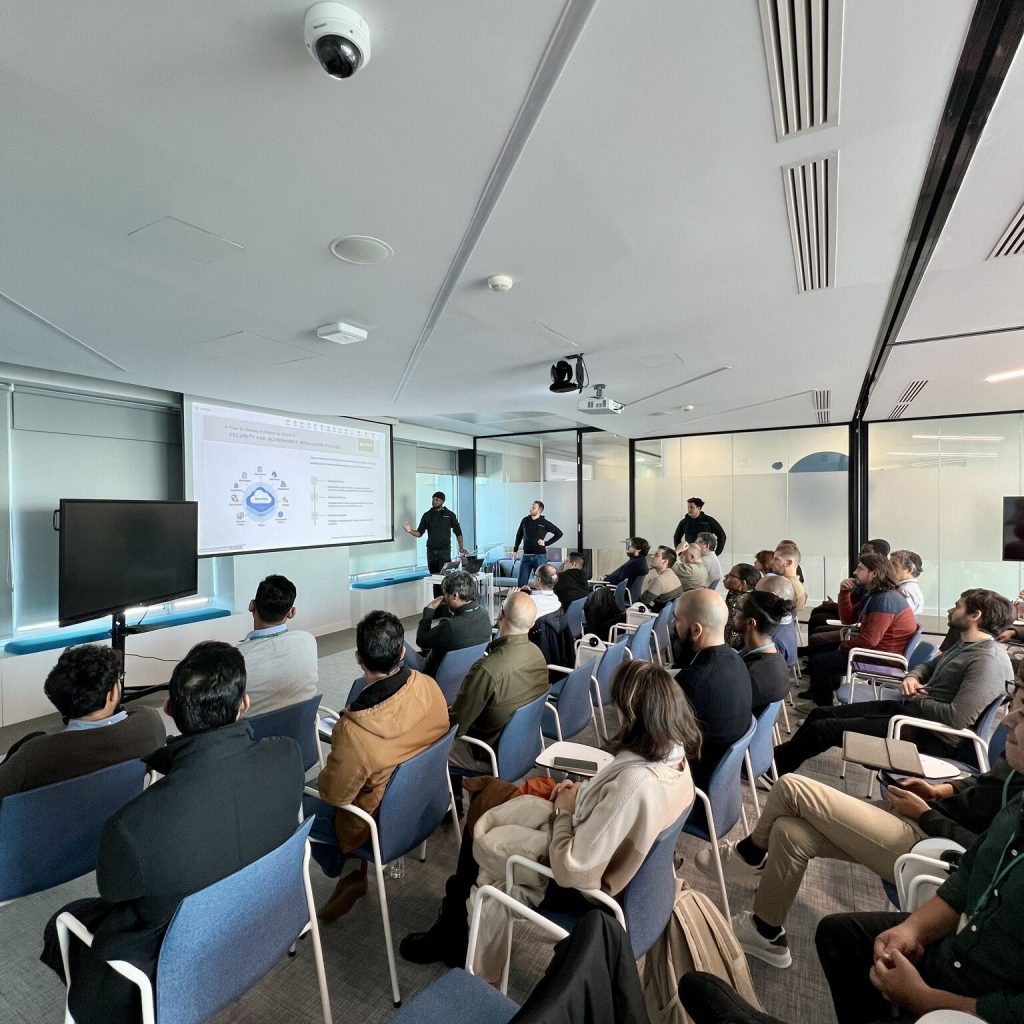
Feedback from private bankers converges around one central point: the reduction of administrative tasks. Before integration, a wealth manager could spend up to 40% of their time searching for information, completing compliance forms or manually consolidating reports. With S2i, workflow automation frees up this time exclusively for client relationship management, prospecting and the development of complex investment strategies.
For operational teams, the impact is just as significant. Back Office managers report a notable decrease in execution incidents and accounting breaks. By relying on an integrated banking platform, closing cycles are shortened and productivity per employee, often measured by assets administered per full-time equivalent, increases significantly. Operational staff can therefore move towards analysis, quality control and exception management tasks, making their roles more rewarding and less routine.
Finally, compliance officers highlight the reliability of KYC and AML processes integrated at the heart of the system. Because alerts are generated automatically based on consolidated and up-to-date data, the analysis of false positives is reduced, allowing teams to focus on genuine financial crime risks.
An integrated banking platform is a centralised software solution that unifies all the operations of a financial institution. Unlike fragmented legacy architectures, it natively connects the Front, Middle and Back Office around a single database. This model enables seamless end-to-end processing, or STP, ensuring that each transaction is processed in real time and without interruption across the entire value chain.
Siloed architectures generate extremely high maintenance costs and slow down innovation. They force teams to carry out multiple manual reconciliations, increasing the risk of operational errors and degrading the client experience. By migrating to unified private banking software, institutions reduce their technical debt, accelerate processing times and gain the agility required to remain competitive in the wealth management market.
The S2i platform frees advisors and wealth managers from time-consuming administrative tasks. By bringing together CRM tools, portfolio simulation features and order placement within a single interface, the system provides a real-time, 360-degree client view. The Front Office can therefore fully focus on what truly matters: high-value advisory services, personalised client relationships and investment strategy.
In a strict regulatory environment, including MiFID II and ESG regulations, centralised software integration is a major advantage. It consolidates data management, making KYC and AML control processes more reliable. Alerts are automated, and the centralised audit trail ensures full traceability by design, greatly facilitating reporting to regulatory authorities.
Yes. Although integrated, modern platforms such as S2i are based on a modular architecture. This means the system can evolve in line with the bank’s growth. Whether the institution wants to offer new asset classes such as private equity, enter new geographic markets or quickly integrate data from a recently acquired entity, the system adapts without requiring a complete overhaul of the IT infrastructure.