Information
Banking Compliance: How Can KYC, Anti-Money Laundering and Counter-Terrorist Financing Be Automated?
29 May 2026 Read the news
The wealth management sector is undergoing a period of transformation. Long protected by high barriers to entry and privileged client relationships, private banks are now facing a “perfect storm”: a sharp tightening of regulations, margin erosion, competition from FinTechs, and the growing expectations of an increasingly connected clientele. The traditional operating model of banks, which […]
The wealth management sector is undergoing a period of transformation. Long protected by high barriers to entry and privileged client relationships, private banks are now facing a “perfect storm”: a sharp tightening of regulations, margin erosion, competition from FinTechs, and the growing expectations of an increasingly connected clientele.
The traditional operating model of banks, which consists of maintaining and running their own IT infrastructure and administrative teams, is showing its limits. This is where banking BPO, or Business Process Outsourcing, comes into play. Far from being a mere accounting optimisation, business process outsourcing is now positioned as a strategic lever enabling financial institutions to regain growth and operational agility.
The decision to outsource often stems from a difficult realisation: managing operations internally has become a barrier to commercial development. Three major factors are currently driving decision-makers.

Since the 2008 financial crisis, regulators have continuously imposed new standards. From MiFID II in Europe to LSFin in Switzerland, as well as FATCA and CRS requirements, the administrative burden has increased dramatically. For a mid-sized private bank, maintaining an internal team capable of monitoring, analysing and implementing these regulatory changes represents a significant cost. The back office no longer simply processes transactions; it must verify the compliance of each transaction, manage anti-money laundering risks (AML), and ensure proper Know Your Customer procedures. Internally, this results in an increase in non-revenue-generating staff. Outsourcing makes it possible to transfer this complexity to a partner for whom it is a core business, and who mutualises regulatory monitoring across all its clients.
Many private banks still operate on legacy systems: ageing IT infrastructures, often developed internally many years ago. These systems are expensive to maintain, difficult to upgrade, and often incompatible with clients’ new digital expectations, such as mobile applications, real-time reporting and electronic signatures. The cost of upgrading these proprietary systems is often prohibitive. By outsourcing the back office, the bank frees itself from technical debt. It transitions to modern, open and secure platforms, often based on APIs, without having to bear the initial capital expenditure alone.
In an internal model, back-office costs are fixed. Whether the bank processes 100 or 1,000 stock market orders per day, it must pay the same salaries, software licences and server costs. In a context of market volatility, this rigidity weighs on the cost-income ratio. Outsourcing makes it possible to transform these fixed costs into variable costs. The BPO billing model is generally indexed to volumes, such as the number of transactions processed, and/or assets under management. As a result, operating costs mechanically adjust to fluctuations in activity: they decrease when the market slows down and increase only when activity rises, and therefore when the bank’s revenues increase.
Beyond simple cost reduction, banking BPO delivers operational added value that directly impacts the quality of service perceived by the end client.

One of the main performance indicators of a back office is the STP rate, or Straight Through Processing rate, which refers to the percentage of transactions processed from end to end without manual intervention. BPO specialists invest heavily in automation and robotic process automation for repetitive tasks. Where an internal team may be exposed to input errors or processing delays during peak activity periods, an industrial platform guarantees fast and error-free execution. This operational efficiency leads to a significant reduction in client complaints related to administrative errors and accelerates processing times, for example when opening an account or executing an international transfer.
Banking technology is evolving at a rapid pace. Blockchain, artificial intelligence, biometrics, open banking and secure cloud computing are all areas that are difficult for a standalone organisation to keep up with. By opting for BPO, a private bank benefits immediately and continuously from the latest innovations. To remain competitive, the BPO provider must constantly upgrade its tools and strengthen the expertise of its teams. In addition, in the face of the rise in cyberattacks, BPO providers have security operations centres and certifications such as ISO 27001 and ISAE 3402, often far beyond what a private bank could afford internally. As a result, the security of client data is strengthened.
Wealth management is a cyclical industry. A bank may experience a period of strong asset inflows, or conversely a phase of outflows. It may also decide to launch a new complex structured product or expand into a new geographic market. With an internal back office, every strategic change involves recruitment, training or redundancies, with all the inertia that this entails. The BPO model offers almost immediate scalability. The provider has resource pools that can be allocated dynamically. The bank therefore becomes more agile: it can launch new offerings faster, with a reduced time to market, without having to worry about the underlying operational logistics.
This is where the central promise behind the target query “Benefits of BPO for private banks” lies. BPO is not an end in itself, but a way to redefine the bank’s value proposition.
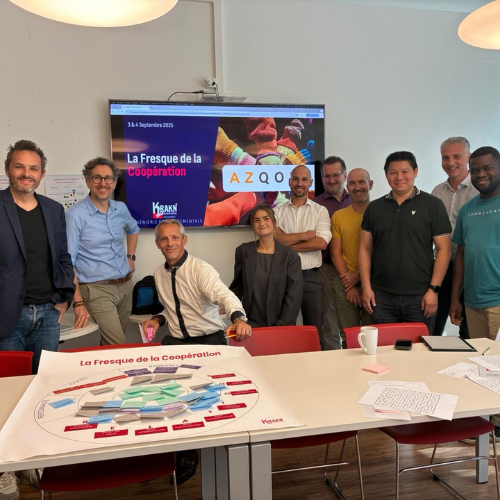
In many institutions, private bankers spend up to 40% of their time dealing with administrative tasks: checking files, correcting reporting errors, and following up on transaction settlements. This is time that is not spent on prospecting or advisory services. By relieving commercial teams of the administrative burden, the bank can expect them to spend more time with clients. The budget saved on the back office can be reinvested in recruiting new wealth managers or wealth planning experts, thereby creating a virtuous cycle of revenue growth.
Today’s high-net-worth clients compare the experience offered by their bank not with that of other banks, but with that of digital giants such as Amazon or Apple. They expect immediacy and transparency. An outsourced and digitalised back office makes it possible to deliver this level of fluidity. Digital onboarding processes, tax reporting produced on time, and a consolidated view of assets available 24/7 all contribute to client retention.
The long-term viability of a private bank depends on its ability to generate profit even during periods of crisis. By lowering the break-even point, outsourcing makes the bank more robust. During downturns, costs fall in line with revenues. During periods of growth, margins increase faster because variable costs remain under control. This financial resilience is particularly valued by shareholders and regulators, as it supports the institution’s long-term solvency.
It is essential to distinguish between generalist IT service providers and specialised BPO partners. Among the latter, Azqore holds a distinctive position in the market. As a subsidiary of Indosuez Wealth Management, part of the Crédit Agricole Group, Azqore combines banking DNA with technological strength.

Unlike patchwork solutions, Azqore relies on its proprietary S2i platform, an integrated information system. This platform was designed specifically for wealth management, rather than adapted from a retail banking system. It covers the entire value chain: from client onboarding and KYC to order placement, settlement and delivery, as well as Lombard lending, banking accounting and client reporting. This native integration eliminates data reconciliation issues between different software systems, a major source of operational errors.
The originality of the Azqore model lies in its user community. More than 20 private banks use the same S2i platform. When a development is created for one bank, for example a new feature for derivatives, it can benefit all users. This mutualisation is particularly powerful when it comes to compliance. The costs of adapting to new regulations are shared across all platform tenants. As a result, a modest-sized bank can access the same level of compliance and technology as a major international bank, at a fraction of the cost.
BPO according to Azqore is not limited to SaaS (Software as a Service). It includes a strong human component. The teams managing operations on behalf of clients are trained banking professionals. This business expertise changes the nature of the relationship: the provider is not merely an IT executor, but a partner capable of challenging processes and proposing optimisations based on market best practices.
Despite its clear advantages, moving to a BPO model is a profound transformation that involves operational and human risks. A rigorous methodology is essential to ensure a successful transition.

Before signing any contract, the bank must carry out a precise mapping of its current processes. Which tasks are critical? What are the local specificities? The objective is to define the Target Operating Model. The aim is not simply to move what already exists elsewhere, but to use the transition as an opportunity to simplify. It is necessary to decide precisely what remains in-house, known as the retained organisation, and what is transferred to the partner. Any grey area or poorly defined responsibility at this stage is likely to create future friction.
The success of BPO is based on trust, but that trust must be measurable. The implementation of strict Service Level Agreements is essential. These contracts define quality commitments: processing times (cut-off times), maximum tolerated error rates and system availability. These Service Level Agreements should be accompanied by financial penalties in the event of non-compliance. At the same time, regular steering committees should be established to analyse Key Performance Indicators, manage incidents and plan future developments. The bank must retain an internal vendor management team with the necessary expertise to oversee the provider effectively.
This is often the most underestimated aspect. Outsourcing creates anxiety among internal teams, who may fear for their jobs or a loss of influence. Communication must be transparent from the very beginning of the project. The strategic vision must be clearly explained: BPO is not intended to eliminate jobs, but to help roles evolve towards higher added-value activities. A training and redeployment plan should support the project, enabling back-office employees to move towards control, project management or commercial support functions. Without team buy-in, the transition to BPO is unlikely to succeed.
IT outsourcing consists of entrusting the management of technical infrastructure, such as servers and software maintenance, to a service provider. BPO (Business Process Outsourcing) goes much further: the bank delegates the actual execution of operational tasks, such as securities back office, payment management and corporate actions processing. With BPO, the provider commits to a business outcome, for example ensuring that a settlement is completed on time, rather than merely guaranteeing the availability of a tool.
Yes, structurally. BPO makes it possible to transform fixed costs, such as salaries, system maintenance and regulatory updates, into variable costs, generally indexed to transaction volumes or assets under management. By mutualising technological and regulatory investments with other banks within a shared platform, such as Azqore’s, a private bank can reduce its processing cost per transaction by 20% to 30% over the medium term.
Yes. Security is the cornerstone of banking BPO. Specialised providers are subject to the same security requirements as banks themselves. They apply strict standards, such as ISO 27001 and ISAE 3402, and ensure compliance with banking secrecy and GDPR. Data is often hosted in highly secure data centres, with strict segregation: client data is never mixed with that of other banks.
This is a common concern, but it is unfounded if governance is properly established. Outsourcing does not mean losing control; it means changing the way operations are managed. The bank moves from internal hierarchical management to contract- and performance-based oversight through Service Level Agreements. Real-time monitoring tools allow the bank to track the progress of operations, error rates and compliance with deadlines, often providing greater transparency than a siloed internal back office.
Wealth management involves complex products, such as structured products, private equity and Lombard lending, which generalist BPO providers often understand poorly. A specialist such as Azqore has a platform natively designed for private banking, S2i, and teams trained in the specific requirements of this business. This ensures a better understanding of wealth managers’ needs and the ability to handle sophisticated operations without friction.
BPO is a major asset for compliance. The provider carries out mutualised regulatory monitoring for all its clients. When a new directive, such as MiFID II or LSFin, comes into force, the provider updates its processes and systems for everyone. The bank therefore benefits from compliance by design, significantly reducing the risk of non-compliance and the cost of adaptation.
The transition to a BPO model is a structuring business project that generally takes between 6 and 15 months in “Adopt” mode, depending on the size of the bank and the complexity of its products. This period includes the initial study phase, usually one to two months, the definition of target processes, data migration, user testing and team training.